Showing posts with label online stock trading and investments. Show all posts

Wednesday, November 17, 2010

managing your personal finances

In the digital age, nobody likes carrying a lot of cash around – I know I don’t, anyway. This can be especially frustrating when you go to keep track of your expenses, who you owe money to, who you lent some to and just where it all goes over the month.

As always, there are a lot of apps out there to help you do various things with your money. There are apps to figure out how to manage your money, oversee expenses, send money to people, keep track of who owes you, and more.

In this article, I’ll show you some of the applications you can take advantage of to do everything I’ve mentioned here, leaving you free to pick and choose the apps that will make your life easier.

id="more-58352">

How to Manage Your Money

I’m beginning to learn just how difficult managing your expenses can be. For the most part, I use my debit card tied to my checking account to make purchases. I use it at the grocery store, when I go out to lunch with my coworkers and on the weekend when I’m out exploring the city.

At the end of the month, my bank statement looks pretty ridiculous. All of these small transactions make it difficult to sift through. I still know what everything is, but if I wanted to see where I could be saving some money I wouldn’t know the first place to look.

Sounds like you? Even if it doesn’t, you could still reap the benefits of visually being able to manage your money. These apps make the process a lot easier.

Mint

style="text-align: center;">

Mint has been on our radar since back in 2007 when Karl wrote about it. Plain and simple, if there is one app I want you to keep in mind it’s this one.

Mint is a free personal finance application that can help you compare your bank accounts, credit cards, CDs, brokerage and 401(k) to the best products out there. It offers a visual representation of your finances and is very easy to set up. Use it to manage your budget, get credit card advice and understand investing.

Here’s a great video showcasing an overview of Mint’s features:

For some helpful tips on how to use Mint, check out Bakari’s article on How To Use Mint To Manage Your Budget & Spendings Online.

Thrive

Thrive (directory app) is also a great application if you’re looking for a simple way to keep track of your spending. With Thrive, you get an overall Financial Health score, which is one number that shows you how financially fit you are. It also shows you scores in other areas and offers you advice on how to make improvements.

style="text-align: center;">

Thrive breaks down your spending for you and shows you where you can save. Compare your current budget to last month’s, as well as view a six month average and target budgets to follow.

Texthog

Looking for an even simpler way to track expenses? Texthog (directory app) lets you easily store, organize and access your receipts, expense reports and more via text message, the web, your email, iPhone and even Twitter.

style="text-align: center;">

A Texthog free account gives one user the ability to track expenses, view unlimited reports and get budget/bill reminders. Take a photo of your receipts and utilize tags and categories to keep track of everything.

To check out Texthog on your iPhone, you can find the application on iTunes.

Venmo

Speaking of text messages, have you heard of Venmo? Venmo (directory app) is a nice little app that lets you pay and charge friends with your phone. Send and receive secure payments by linking your card to your account. This allows you to settle small loans you give/get by eliminating paper transactions for small amounts of money.

style="text-align: center;">

To use Venmo, all you do is create an account. You can then send and receive money to other accounts simply by using text commands in SMS. Accept a “trust” request from your friends and make transactions without having to authorize them by texting a 3 digit code.

This is a pretty solid application that I have been using a lot lately with my friends/coworkers. It’s great for when a bunch of you are out to lunch and not everyone has cash on them. “I’ll just put it on my card and Venmo you all afterwards.”

Owe Me Cash

style="text-align: center;">

Owe Me Cash is a nice app I found recently that is also very easy to use. If someone owes you money, you just sign into Owe Me Cash with your Twitter, Facebook, OpenID, or regular account and tell the app about the debt. The app will send automatic reminders to those that owe you money by phone, text and email, so you can get paid!

This app is more fun than serious, but it doubles as an easy way to keep track of who owes you what. Let the app bug your friends to pay you so you don’t have to do it yourself – it’s a win-win.

Conclusion

With these applications, your finances will never look better. Say goodbye to paper money and change.

What do you think of these money-managing applications? Will you be using any of them?

Image Credit: marema


A survey released today by Javelin Strategy & Research, which serves financial institutions, found in August that nearly one in five Americans doesn't monitor or manage their personal finances. That rate is double what it was just a year ago. Despite the fact the recession has made it more important than ever to carefully track our money, when it comes to personal finances, 19% of Americans stuck their head in the sand. A year before, another survey had the figure at just 8%.


More anxiety-induced news: The percentage of Americans who say they sometimes log onto their checking account balances with their banks' websites dropped to 46%, down 13 points from 59% a year ago. Even those who track their money by pen and paper dropped, from 50% to 46%.


"It's a natural human reaction to stress: 'Maybe if I don't look at it, it will go away.'" explains the study's co-author, senior analyst Mark Schwanhausser. "I think you have fewer people checking their finances online because they don't like what they're seeing. 'I'm going to be a financial sleepwalker. I'm not going to look.'"


Schwanhausser's prescription for the problem involves convincing America's major financial institutions that they're doing a lousy job helping make it easier and less stressful for their customers to track their money. "It's not enough to tell you how to fix the toilet," he says. "You've got to have the wrench."


Yet despite the fact that most Americans' money resides at a bank, few banks are interested in furnishing financial planning tools. Right now, Schwanhausser argues, most people are required to log into a wide variety of websites to track their money. For example, 75% of Americans who have a credit card get it from somewhere other than their primary bank, meaning their finances are scattered across many websites, unreconciled.


When people do turn to their bank's websites, he argues, the financial planning tools are nearly non-existent despite the fact our society increasingly demands greater personal control through technology. "Today's online banking is like having avocado green appliances from the 1970s. It just doesn't cut it," says Schwanhausser.


Schwanhausser is using the survey to convince banks that it will actually endear customers to them if they put personal finance tools front and center on their sites, helping customers paint a clear picture of their own financial habits. He's pressing them to develop systems, both on the Web and through mobile apps, that can draw in customers' information from other sites, such as credit cards and mortgage lenders, so financial care-taking can be a one-stop process.


So far, banks and lenders have been slow to use existing technology to make money management a less daunting chore. Part of the issue is that many banks don't want to acknowledge competitors by drawing in account balances from elsewhere. Banks also stand to make money off poor financial planning through penalties and fees. Like a doctor who makes money off treating disease, promoting financial good health does not on the surface appear to be in a bank's best interest.


"You can't manage what you don't measure," says Schwanhausser. "And if the bank's not going to provide it for you, you have to go get it in other places."


He recommends existing aggregators such as Mint.com, which pulls your data from multiple sources and lays it out in spreadsheets and in spending plans, as a model for what all the banks should be doing for their customers.


He also notes that Bank of America's "My Portfolio" and Wells Fargo's "My Savings Plan" are two fledgling, if little-known, bank-created features that are slowly reaching toward the sort of comprehensive personal finance planning features he advocates.


As long as it remains difficult or scary, though, when it comes to their finances, Americans will remain more likely to use the Ostrich Method.
alpine payment systems scam

More Bad <b>News</b> for Obama 2012: Catholics Elect Dolan - Swampland <b>...</b>

Corrected Nov. 17: The Catholic bishops' surprise election yesterday of New York's Archbishop Timothy M. Dolan as their president is more bad news for Obama in 2012.

Video: Is Cable <b>News</b> Actually <b>News</b>? - NYTimes.com

Video: Pondering the value and integrity of cable news.

Eva Longoria Files for Divorce from Tony Parker | TMZ.com

MAKE TMZ MY HOMEPAGE; TMZ RSS/XML � iPHONE APP � ANDROID APP � TEXT ALERT � FACEBOOK � MYSPACE � TWITTER � YOUTUBE � TIPS � Sign In | Sign Up. HOT SEARCHES: Sebastian Bach | Princess Diana | Brittny Gastineau � TMZ AOL News ...


Time Table 2 by corsin


More Bad <b>News</b> for Obama 2012: Catholics Elect Dolan - Swampland <b>...</b>

Corrected Nov. 17: The Catholic bishops' surprise election yesterday of New York's Archbishop Timothy M. Dolan as their president is more bad news for Obama in 2012.

Video: Is Cable <b>News</b> Actually <b>News</b>? - NYTimes.com

Video: Pondering the value and integrity of cable news.

Eva Longoria Files for Divorce from Tony Parker | TMZ.com

MAKE TMZ MY HOMEPAGE; TMZ RSS/XML � iPHONE APP � ANDROID APP � TEXT ALERT � FACEBOOK � MYSPACE � TWITTER � YOUTUBE � TIPS � Sign In | Sign Up. HOT SEARCHES: Sebastian Bach | Princess Diana | Brittny Gastineau � TMZ AOL News ...


alpine payment systems scam

More Bad <b>News</b> for Obama 2012: Catholics Elect Dolan - Swampland <b>...</b>

Corrected Nov. 17: The Catholic bishops' surprise election yesterday of New York's Archbishop Timothy M. Dolan as their president is more bad news for Obama in 2012.

Video: Is Cable <b>News</b> Actually <b>News</b>? - NYTimes.com

Video: Pondering the value and integrity of cable news.

Eva Longoria Files for Divorce from Tony Parker | TMZ.com

MAKE TMZ MY HOMEPAGE; TMZ RSS/XML � iPHONE APP � ANDROID APP � TEXT ALERT � FACEBOOK � MYSPACE � TWITTER � YOUTUBE � TIPS � Sign In | Sign Up. HOT SEARCHES: Sebastian Bach | Princess Diana | Brittny Gastineau � TMZ AOL News ...


Friday, September 24, 2010

how to budget personal finances


Events of the last week have made the Deficit Commission an embarrassment. Co-Chair Alan Simpson is a one-man disaster movie, compulsively offending one key voting bloc after another. Commission member Paul Ryan faced an angry crowd over his anti-Social Security stance, while another Commissioner locked experienced workers out of a nuclear facility rather than provide retirement benefits.


That's right: He's cutting retirement benefits.


But if the political blowback is obvious, here's what isn't: The Commissioners who are determined to cut your Social Security benefits are going to enjoy their own retirements in comfort. Their own pension plans insulate them from the fears that many other Americans face, and they don't have the professional expertise that would help them understand those concerns. In fact, the Commission's only expert on retirement is Rep. Jan Schakowsky, and she apparently opposes benefit cuts. The rest of the Commission is dominated by people who've expressed their desire to cut Social Security, despite their own secure futures. Millions of working Americans who have contributed to Social Security all their lives will lose out if these Commissioners have their way.


Happy Labor Day.


Normally I consider it off-limits to discuss people's personal finances when discussing their political opinions. But these Commissioners' lack of subject matter expertise, along with their lack of empathy, is important. If you don't know much about the topic and are protected from the problem, what makes you credible? Their pre-established prejudices makes the situation even worse, and their own situations underscore the irony of their self-professed willingness to make "brave choices" - choices whose consequences will mean little or nothing to them.


The Commission's Social Security obsession is odd anyway, since the projected Social Security shortfall comes out to only 0.7% of GDP. Nevertheless, these Commissioners have made their benefit-cutting intentions plain, presumably because they want to offer up America's seniors as a sacrifice to the bond markets. So how will these would-be income-slashers for the elderly make out in their own golden years? They'll be golden.


Consider Commissioner Alice Rivlin. Rivlin co-authored a paper that called for raising the retirement age and other benefit cuts, and recently released a specious paper about "Saving Social Security." As a former HEW Undersecretary, CBO Director, White House Budget Director, and Federal Reserve Vice Chair, she will presumably enjoy a comfortable retirement supported by multiple public pensions. Says Rivlin: ""We can't get out of this problem without doing both spending cuts, especially slowing the growth of entitlement, and tax increases."


Experts on Social Security finance (including the long-time Chief Actuary for the program) flatly disagree with Rivlin, pointing out that an adjustment to the payroll tax cap would unquestionably be enough to get the job done. They have the numbers to prove it. So why does Rivlin, who does not have their expertise in this area, disagree? Go ask Alice.


Co-Chair Erskine Bowles brokered a deal with Newt Gingrich to cut Social Security in the 1990s, when he served as Bill Clinton's Chief of Staff. Before that he headed the Small Business Administration, so his government tenure presumably qualifies him for a Federal pension. If not, don't worry: He receives $425,000 per year in his current job running the public universities of North Carolina, and the people of North Carolina are presumably also funding a pension on his behalf. To his credit, Bowles pledged to donate $125,000 of his salary for need-based student funds - but then, he can afford it. As the son of a US Congressman, Bowles had the education and connections needed to make millions as an investment banker. The added income he earns today as a Board member for General Motors and Morgan Stanley will help, too - and his government experience undoubtedly helped him win those positions, too.


Republican Rep. Paul Ryan, an aggressive advocate of Social Security cuts and privatization, will also enjoy his sunset years in comfort, thanks to a publicly-funded pension from his tenure as a Congressman. (He'll presumably earn even more as a result of his employment as an aide to two United States Senators.) Rep. Jeb Hensaerling has served as both a Representative and as an aide to Sen. Phil Gramm, so he should be safe from financial insecurity in his old age too .


The average annual pension payments for former members of Congress ranged from $41,000 to $55,000 in 2002, considerably more than the average $13,836 that Social Security recipients received in 2009. Yet neither Ryan nor Hensaerling have proposed cutting Congressional retirement benefits - nor should they. Sound pension plans like theirs were once available to most working Americans, and more effort should be made to restore them.


Former SEIU President Andrew Stern, who once might have been counted on to defend Social Security, recently sneered at Commission critics as "assassins of change" while saying that "all entitlements should be on the table." Mr. Stern's annual pension is $152,000 - and he retired at the age of 59, not 70. Nevertheless, Stern now publicly muses about "whether defined benefit pensions can really exist in the long run in a globalized economy."


Judd Gregg, who wants to raise the retirement age to 70, will receive a Federal pension for his Senate position. Gregg, like Alan Simpson, is the son of a Governor (self-made men, you might say), which means that public pensions also ensured that neither of them had to worry about supporting their aged parents. Tom Coburn, another would-be Social Security cutter, will receive a Congressional and Senatorial pension too.


David Cote, the CEO of Honeywell, provides some "private enterprise" perspective to the Commission's work. But Cote's wealth comes in part from Honeywell's government contracts, which exceed $4 billion annually. What's more, Cote's "free enterprise" ethic didn't stop him from making sure that Honeywell grabbed a few million in stimulus money from the taxpayers, too. A few billion from the Pentagon here, a few million more from Uncle Sam there - that'll plump up the nest egg a little for Mr. Cote's sunset years.


Cote made the headlines this week when Honeywell locked out the union workers at a nuclear power plant over a labor dispute - even though the workers agreed to stay on the job to protect public safety. Instead, Cote hired replacements and put them through a pared-down training process. The image of Homer Simpson comes to mind, pushing the wrong buttons and spilling beer on the reactor console - which would presumably make Cote Mr. Burns.


But it's no joking matter. Apparently there's real danger, which is why the Nuclear Regulatory Commission reportedly stepped in to block Honeywell from distilling uranium with its crew of replacement workers And what are the union and Honeywell arguing about? Honeywell's raising health care costs - and eliminating retiree pension plans for new workers.


That's right. A member of the Commission that's pretending to judge our retirement security with impartiality would rather have hastily-trained amateurs handle nuclear materials than bargain openly with his workers - about their retirement. D'oh!


As for Simpson (Alan, not Bart), to say that he suffers from "political Tourette's syndrome" would be a disservice to Tourette's sufferers. Most of them don't really say socially objectionable things, and those who do (it's called "coprolalia") don't mean what they say. But Simpson does. By attacking senior citizens as "greedy geezers," then offending women with his "milk cow with 100 million tits" comment, and now offending veterans' groups, Simpson has now hit the voting bloc trifecta.


And Cote's outraged labor, a fourth group. But the problem isn't Simpson anymore, or Cote for that matter. It's the Commission itself. The coprolalic curmudgeon Simpson has done a service to the nation. He's drawn attention to the Commission, and to the anti-Social Security biases held by so many of its members - all of whom will retire in comfort, thanks to those whose benefits they would cut. It's the comfortable afflicting the afflicted.


If these Deficit Commission members want their recommendations to have any credibility, they should pledge to live on the same Social Security benefits that they would impose for other Americans. Better yet, they should dedicate themselves to helping provide every American with the kind of retirement security they enjoy. That was part of the social contract this nation embraced during its years of greatest economic growth, the fulfillment of a promise that a lifetime of work should never end with years of deprivation. They should be working to restore that contract, not erode it even further.


One thing is clear: This Commission has no business making recommendations about Social Security.


(Sign a petition asking Congress and the President to protect Social Security from the Deficit Commission. Roger Hickey has more here.)


Additional links:


* Sam Seder and I discussed Social Security this week while co-hosting The Young Turks.


* For further reference on the Commission's members and their biases, see Firedoglake and Talking Points Memo.


* House Democrats are vowing to protect Social Security from any cuts. The polls show why that's a very wise idea.


I am a 25 year old college student (school, job + savings, back to school… long story) and boy do I wish I knew about all the resources available to me back then. Good for you for starting early!


Lucky for me I have 1 parent (divorced) who is so bad with money that I have been scared into financial responsibility from a young age. Was I perfect? Hahaha.. but I am doing better than 95% of my friends are right now so I guess I am doing something right?


Here is my advice:


1. GET A JOB! - 2 shifts a week is all it takes. I have friends who just graduated from college without ever having a job. Result? No work experience so nowhere will hire them. Some had problems even getting an internship! Try for customer service jobs. Employers value people skills more than flipping burgers.


2. BUDGET! - Cant teach an old dog new tricks so it is best to start young. Add up your monthly expenses such as rent/insurance/cell/gas/etc and divide by 2 or 4 (depending on weekly/bi-weekly payday). Put this money in savings and no touchy! Once you can live on that budget a certain % for an emergency fund and then % for savings. The rest is your “fun” money. As others have said: pizza, ipods, and clothes are “fun money” and NOT emergencies!


3. DEBIT, CREDIT, or CASH?


DEBIT- I am a die hard debit card user. My credit union has detailed (free) online banking. I check my online bank statement in the morning and at night and go over my spending. Think of it as an instant virtual slap in the face about your spending habits. It hurts for the best.


CASH - Some people just cant be responsible enough to respect the plastic and do better with cash. Try and keep bigger bills on you. Breaking a $5 is less mentally painful than breaking a $20. $1s are dangerous. That can of coke is “only $1″. $7 a week, $30 a month. It adds up.


CREDIT - Many say don’t get a credit card, but I disagree. If you are responsible college is a great time to build credit (unless you have some serious control issues… if that is the case, these are not the droids you are looking for…). Not building credit early is the BIGGEST regret I have. Good credit means better rates when buying a house or a car. Do your research first. Consider a student, or if you have to a secured card.


More about credit-


*Do NOT apply for a credit card on campus. It is like selling your soul for a candy bar. Every time you apply for a credit card they run a credit check, which “pings” you. Too many pings hurts your credit score. Not good. Friend did that at every kiosk that offered something free to sign up when she was 20. This was 7 years ago and her credit is still recovering! The same is true for store credit cards. Do.Not.WANT!

*Pick a required expense, such as gas or cell phone bill and put it on the credit card. Pay off the card at the end of each month. Repeat.

*Do NOT use your credit card to buy “fun money” purchases. No clothes, no ipods, no pizza. This is why you have your debit card of cash. Don’t even think about it mr.!


4. EATING/DRINKING - This is going to be the weird random one from one young person to another.(Part of this only applies to you on/after your 21st birthday!) The young person’s life revolves around being social. For a 20 something this normally involves dinner and/or drinks with friends. It is expensive! So much money can be saved if you plan ahead!


*Eating - Going out to eat is a much needed social experience but NEVER go out to eat starving! Just like you don’t go shopping when you are hungry you never want to experience the whole “eyes bigger than stomach” thing while dining out. Have a snack an hour or so before you meet friends for dinner. This will help you avoid ordering that $8 appetizer! Also, try and order things that reheat or are good cold. LEFTOVERS! Also, water is free. It is good for you! Coke is $3. Go buy yourself a 12 pack and have one when you get home.


*Drinking - Most 20 somethings drink. It is a very expensive part of our lives. It is a social event to help us forget about school and work. We like bars. Unfortunately $5 for a beer is highway robbery! NEVER go to a bar completely sober (when you are 21+ & no drinky + drivey!). Have a drink or 2 at home and then have a beer at the bar. You will save TONS. Also, bring cash to a bar. Only bring as much cash as your sober self would like to spend. Alcohol impairs judgment. Sober you will thank drunk you for not spending. Drunk you will thank sober you for being smart enough to make sure you can afford the advil to take care of that hangover the next day. It is a win win.


Put all that saved food and drink money towards something that will last.


5. BOOKS - Buy used whenever possible. Check online first because campus stores are normally a ripoff. Try and sell the books back online, even if they have released a new edition. Most student book stores on campus will only give you 1/2 of what someone online will be willing to give you!


6. CARS - Buy used and reliable, but not “cheap”. New cars lose tons of value when you drive them off the lot. Don’t buy a “cheap” used car on it’s last leg. Think Goldilocks - not too new, not too old, juuusssttt right! Save up as much money as possible. Pay for it in cash if you can. If not, save up at least 2/3 before purchasing and do your homework!


And whatever you do: AVOID parking tickets, speeding tickets, registration fines.. may as well light the money on fire! Or if you do not want it I will give it a nice home and save you the trouble.


big white booty requirements

The American Spectator : Good <b>News</b>

Hard to avoid the good news these days. A few days back we learned that the war in Iraq was over. Well, sort of, anyway. The President explained that U.S. troops were done with combat but would remain in a support and advisory capacity. ...

Expats talks <b>news</b> over booze - RT

This week, Moscow's expats share their impressions of the stories that made the news, including the Arctic Forum, Pakistan's floods and the Art Moscow Fair.

Scripting <b>News</b>: Angelgate in a Nutshell

Recent stories. Twitter links. My 40 most-recent Twitter links, ranked by number of clicks. My bike. People are always asking about my bike. A picture named bikesmall.jpg. Here's a picture. AFP news pic. Calendar ...


The American Spectator : Good <b>News</b>

Hard to avoid the good news these days. A few days back we learned that the war in Iraq was over. Well, sort of, anyway. The President explained that U.S. troops were done with combat but would remain in a support and advisory capacity. ...

Expats talks <b>news</b> over booze - RT

This week, Moscow's expats share their impressions of the stories that made the news, including the Arctic Forum, Pakistan's floods and the Art Moscow Fair.

Scripting <b>News</b>: Angelgate in a Nutshell

Recent stories. Twitter links. My 40 most-recent Twitter links, ranked by number of clicks. My bike. People are always asking about my bike. A picture named bikesmall.jpg. Here's a picture. AFP news pic. Calendar ...


big white booty

The American Spectator : Good <b>News</b>

Hard to avoid the good news these days. A few days back we learned that the war in Iraq was over. Well, sort of, anyway. The President explained that U.S. troops were done with combat but would remain in a support and advisory capacity. ...

Expats talks <b>news</b> over booze - RT

This week, Moscow's expats share their impressions of the stories that made the news, including the Arctic Forum, Pakistan's floods and the Art Moscow Fair.

Scripting <b>News</b>: Angelgate in a Nutshell

Recent stories. Twitter links. My 40 most-recent Twitter links, ranked by number of clicks. My bike. People are always asking about my bike. A picture named bikesmall.jpg. Here's a picture. AFP news pic. Calendar ...


When is it time to switch your banking service by financemetrics


When is it time to switch your banking service by financemetrics


personal finance planning


I've read a lot of stores lately about "credit score enthusiasts" who want to get the perfect credit score or are obsessed with improving their score. While it's certainly better than not caring about your credit score at all, it almost never pays to get a perfect score.


Despite all the stories about the odd ways your score is being used, the reality is that once you have a good credit score, you don't need to obsess about it.


Consider this - if your score is better than 760, then Fair Isaac Corporation, the company that invested the credit score formula; says you get zero benefit from improving it. For mortgage interest rate purposes, a 761 is the same as an 850. For auto loans, the bar is even lower. If you have a score about 720, it's the same as having a perfect score of 850. Visit their site and look in the right hand column - there's a table listing FICO scores and APRs for 30-year fixed mortgages, 15-year fixed mortgages, and 36-month auto loans.


If you are planning on getting a loan in the next year or two and your score is close to the next tier, by all means try to improve it. If you aren't planning on getting a loan and you have a decent score, focus your energies on something else. I assure you that you will get a better return doing something other than obsessing about your credit score.


Jim writes about personal finance at Bargaineering.com.


Synium Software has released an update to iFinance Mobile adding native iPad support and several additional new features. iFinance Mobile is a personal finance application for iOS devices that allows users to record transactions and expenses on the go and optionally sync that data with iFinance for the Mac for expanded financial review and planning. iFinance Mobile 2.0 is now a universal app providing native support for the iPhone, iPod touch and iPad and adds a new Account History chart, CSV export of transaction data via e-mail and an improved, redesigned user interface for both the iPhone and iPad. The update also provides several other smaller enhancements such as a graphical calendar view, automatic BIC and IBAN validation, transaction sorting by date and localization in Czech, Polish, French and Russian. iFinance Mobile 2.0 is available from the App Store for $2 and is a free update for users of any prior version.


big white booty brokers

Small Business <b>News</b>: An Owner&#39;s Manual

If only there were an owner's manual that came with your small business telling you what works, what doesn't and what are the best ways to move ahead in your.

&#39;Fox <b>News</b> Sunday&#39; to Host Kentucky Senate Debate - NYTimes.com

Jack Conway, Kentucky's attorney general and the Democratic candidate for Senate, and Rand Paul, the Republican nominee, have agreed to a live debate on "Fox News Sunday" on Oct. 3.

ICM And WME And CAA <b>News</b>… – Deadline.com

ICM's talent department signed Emmy nominee and TV standout (Malcolm In The Middle) Jane Kaczmarek, who had been represented by WME. She's managed by Adena Chawke and Lisa Wright at Greenlight Management. Also joining ICM from WME is ...


Small Business <b>News</b>: An Owner&#39;s Manual

If only there were an owner's manual that came with your small business telling you what works, what doesn't and what are the best ways to move ahead in your.

&#39;Fox <b>News</b> Sunday&#39; to Host Kentucky Senate Debate - NYTimes.com

Jack Conway, Kentucky's attorney general and the Democratic candidate for Senate, and Rand Paul, the Republican nominee, have agreed to a live debate on "Fox News Sunday" on Oct. 3.

ICM And WME And CAA <b>News</b>… – Deadline.com

ICM's talent department signed Emmy nominee and TV standout (Malcolm In The Middle) Jane Kaczmarek, who had been represented by WME. She's managed by Adena Chawke and Lisa Wright at Greenlight Management. Also joining ICM from WME is ...


big white booty

Small Business <b>News</b>: An Owner&#39;s Manual

If only there were an owner's manual that came with your small business telling you what works, what doesn't and what are the best ways to move ahead in your.

&#39;Fox <b>News</b> Sunday&#39; to Host Kentucky Senate Debate - NYTimes.com

Jack Conway, Kentucky's attorney general and the Democratic candidate for Senate, and Rand Paul, the Republican nominee, have agreed to a live debate on "Fox News Sunday" on Oct. 3.

ICM And WME And CAA <b>News</b>… – Deadline.com

ICM's talent department signed Emmy nominee and TV standout (Malcolm In The Middle) Jane Kaczmarek, who had been represented by WME. She's managed by Adena Chawke and Lisa Wright at Greenlight Management. Also joining ICM from WME is ...


Martin's West, Baltimore by Julia Delligatti


Martin's West, Baltimore by Julia Delligatti


Saturday, September 18, 2010

personal finance budgeting


Are you a fan of the GTD personal productivity system? Well if you like "Getting Things Done," here's GFD, Getting Finances Done, which shows you how to map David Allen's same principals to managing your personal finance and achieving your financial goals.


Applying GTD principles to your personal finances - Part 1 [Getting Finances Done]


BillFloat Pays Your Bills When You Can't


If money's tight and you need a little extra time to cover a bill, service BillFloat can take care of it for you and you can pay them back later.

After entering the company you need to pay, you give BillFloat the amount of the bill and your account number. It'll let you know how many days it'll float the bill (a maximum of 30) and how much you'll owe BillFloat—which is generally $5, but decreases with the number of bills you pay. BillFloat will collect a little more information about you, like how you're going to pay them back, and then you'll be all set. Just make sure you'll have the money in a month, since BillFloat won't float its own bills.


dr. eric seiger how to lose weight fast penis extender

Fox <b>News</b>, Chris Wallace Sue Robin Carnahan For Ad Featuring <b>...</b>

Fox News and anchor Chris Wallace have jointly filed a lawsuit against Missouri Democratic Senate candidate Robin Carnahan in response to her latest ad, which features a 2006 interview between Wallace and her opponent, Rep. Roy Blunt.

<b>News</b> from across the pond: Russell Brand allegedly attacks a <b>...</b>

Russell Brand allegedly attacks a photographer: here Kim Kardashian's body worries: here Justin Bieber's love for him mom: here 201009.

Pope visits Britain: protests and Hyde Park vigil | <b>News</b> <b>...</b>

Pope expresses 'deep sorrow and shame' over abuse • Benedict met five victims of clerical sex abuse • Pontiff meets party leaders ahead of a Hyde Park vigil • Thousands attend march by the Protest the…


Get a Free Credit Report and Free Credit Score at Quizzle by QuizzleTown


Tuesday, September 14, 2010

personal financeonline personal finance


penis extender

About Those Fox <b>News</b> Polls

The new set of Fox News surveys that we highlighted earlier were actually conducted by Pulse Opinion Research, which is a new venture from pollster Scott Rasmussen which "will allow anyone willing to pay $600 to go to the website, ...

Pew Research: More People Got Their <b>News</b> Online Yesterday Than <b>...</b>

The Pew Research Center, which regularly surveys US consumers about their media consumption habits, put out a report which shows that more people are getting their news online than from print newspapers. In response to a survey question ...

Samsung NX100 mirrorless compact launched and previewed: Digital <b>...</b>

Samsung NX100 mirrorless compact launched and previewed: Samsung has announced the addition of the NX100 to its NX series of mirrorless interchangeable lens cameras. It features the same 14.6Mp sensor and 3.0" OLED screen as the NX10, ...


internet marketing course

About Those Fox <b>News</b> Polls

The new set of Fox News surveys that we highlighted earlier were actually conducted by Pulse Opinion Research, which is a new venture from pollster Scott Rasmussen which "will allow anyone willing to pay $600 to go to the website, ...

Pew Research: More People Got Their <b>News</b> Online Yesterday Than <b>...</b>

The Pew Research Center, which regularly surveys US consumers about their media consumption habits, put out a report which shows that more people are getting their news online than from print newspapers. In response to a survey question ...

Samsung NX100 mirrorless compact launched and previewed: Digital <b>...</b>

Samsung NX100 mirrorless compact launched and previewed: Samsung has announced the addition of the NX100 to its NX series of mirrorless interchangeable lens cameras. It features the same 14.6Mp sensor and 3.0" OLED screen as the NX10, ...


big white booty


Thursday, September 2, 2010

personal finance budgets


Now that Wesabe is officially closed, many users are looking for an alternative that offers the same flexibility and features -- for many this alternative is, or should be MoneyStrands.


MoneyStrands is a free tool that has helped people manage their money online since it launched in March 2009 -- and in short order has won a Webby award for the best of the web in the banking and bill-pay category. This honor is no surprise when you consider that MoneyStrands offers features you won't find in many competing tools such as Mint.


Like all modern personal finance tools, MoneyStrands can connect to a large number of banking and financial institutions, but unlike most competitors gives users the ability to manually upload their account data. This option is a must-have for those who don't want to give their login info to a third party, or who bank at a smaller bank or credit union that personal finance tools cannot connect to for automatic updates.


MoneyStrands also sets itself apart from the competition because it is designed to make it easy for international and non-English speaking users to use the tool. The MoneyStrands website can be viewed in both English and Spanish with a toggle in the settings and users can choose their preferred currency from a long list. According to MoneyStrands, consumers use the service in 44 countries.


These features supplement the standard account linking and money management that the MoneyStrands tool handles well. Users can view spending and account history in one location as well as compare spending in categories such as shopping, food & dining and more to see how they stack up to the rest of the community. Filters allow you to compare yourself to other members based on age, gender, marital status, education and other variables.


MoneyStrands also has a budgeting tool that tracks spending and sets email alerts when a budget category reaches a certain level so spending can be put in check. The tool is fairly simple and requires users to figure out their own goals, but Atakan Cetinsoy, General Manager of MoneyStrands told WalletPop in a phone interview that an improved budgeting tool that walks users through the process is coming in the next few months.


MoneyStrands is easy to use and offers significant value to users; especially those who can't or don't want to link their accounts directly to a third-party service.


Some Republicans and Democrats can get their heads together now and then.


When I had the privilege of working for Senator Jeff Bingaman (D-NM) in the US Senate, I had just moved over from serving as founding Executive Director of the Nixon Center for Peace & Freedom, later renamed (thankfully) "The Nixon Center".


Senator Bingaman at the time, along with his chief of staff Patrick Von Bargen, were asking key questions about the structure of international trade and finance and why such large bilateral deficits were building between the US and respectively Japan and China. University of Chicago-trained neoclassical economists regularly parroted the line that bilateral deficits were "meaningless" and would be balanced out over time with other global trade partners -- and would on a bilateral basis rise and fall, appearing and disappearing in a highly fluid global economic environment.


Bingaman's and Von Bargen's questions then are even more relevant today -- and given the time on the clock since, it's clear that the economists who argued that deficits were meaningless or that a job is a job is a job -- whether working as a wallet maker or a nano-technology app developer -- were wrong.


But Jeff Bingaman, even though skeptical about how the global economy was working in real rather than ideological terms, never turned his back on international engagement. In 1996, Bingaman, Von Bargen and I traveled to Japan, South Korea, China, and other parts of Asia. This, then, was an annual trip supplemented by his personal trips to Guatemala and trips to Europe, Russia and more. Bingaman, now Chairman of the Senate Committee on Energy, remains deeply engaged and interested in international affairs.


And while most Senators and Congressman make a point of pushing 95% of their available press time towards the Bartlesville news outlet (in the case of Oklahoma) over the demands of the Yomiuri, Le Monde, Al Jazeera, or the People's Daily, Bingaman is one that does make time for international media.


The Nixon Center as well was stacked with big personalities who were then and remain deeply committed to America's engagement in global affairs. While the Nixon Center is actually fastidiously non-partisan and has key Dems and Republicans engaged with it, it's hard to hide all of its Republican stripes when in fact the institution's inspiration and founder was a powerful two-term winning Republican President of the United States.


My point is that there are Democrats and Republicans -- lots of them -- committed to robust international engagement, to smart foreign aid, and to coherent and sensible U.S. international public diplomacy.


But just as when I worked for Bingaman in the Senate and there were some Democrats and more Republicans who looked at having a passport as a political liability, many in the Tea Party movement are a manifestation of a similar pugnacious nationalism that disdains international institutions and US engagement abroad.


One of the major bipartisan NGOs committed to internationalism in Washington is the U.S. Global Leadership Coalition. I attended the USGLC's gala dinner last year featuring NBC's Andrea Mitchell and Secretary of State Hillary Clinton.


But the guy who really impressed me was the charismatic Republican Congressman from Illinois, Aaron Schock -- who went on stage and made a case as strong as any liberal internationalist I have heard for the hard core national interest reasons that the U.S. should support global affairs and engagement -- and yes, foreign aid budgets.


Aaron Schock is a serious player on the way up -- and too many are distracted by his better than average looks and youth. I didn't support his approach to Honduras (for the most part) that he seemed to have jointly worked out with Senator Jim DeMint -- but that is beside the point. Schock is thinking hard about smart policy, not just coasting with his new found power and privileges in Washington.


If the USGLC can bring Hillary Clinton and the Republican House Deputy Whip together to sing from similar playbooks, then I have time for this private sector initiative to promote public support for international engagement.


If you are in DC (and if not, I am sure that there will be "live streaming" that I will arrange to have run here at TWN), you might want to attend the annual USGLC 2010 Washington Conference (registration information here) that takes place September 28-29, 2010 at Washington's Grand Hyatt.


I would support this meeting whether I was speaking or not -- but I happen to be on the program along with NBC Meet the Press' David Gregory, Under Secretary of the Treasury Lael Brainard, US AID Administrator Rajiv Shah, U.S. Trade Representative Ron Kirk, and the indefatigable Joshua Rogin -- who writes Foreign Policy's "The Cable".


-- Steve Clemons publishes the popular political blog, The Washington Note. Clemons can be followed on Twitter @SCClemons


how to lose weight fast photo

Hot Air » Great <b>news</b>: Left-wing president turns into tax-cutting <b>...</b>

Great news: Left-wing president turns into tax-cutting conservative just before midterms.

Coast Guard responding to rig fire Gulf of Mexico; people reported <b>...</b>

Enlarge Matthew Hinton, The Times-Picayune Matthew Hinton / The Times-Picayune A helicopter lands with survivors of the rig explosion at the Terrebonne General Medical Center in Houma all survivors walked off the helicopters Thursday ...

How Murdoch&#39;s <b>News</b> Of The World Hacked The Royals&#39; Voice-Mail

The palace was in an uproar, especially when it suspected that the two men were also listening to the voice mail of Prince William, the second in line to the throne. The eavesdropping could not have gone higher inside the royal family, ...


Finance by alancleaver_2000


Wednesday, September 1, 2010

personal finance books


I am a 25 year old college student (school, job + savings, back to school… long story) and boy do I wish I knew about all the resources available to me back then. Good for you for starting early!


Lucky for me I have 1 parent (divorced) who is so bad with money that I have been scared into financial responsibility from a young age. Was I perfect? Hahaha.. but I am doing better than 95% of my friends are right now so I guess I am doing something right?


Here is my advice:


1. GET A JOB! - 2 shifts a week is all it takes. I have friends who just graduated from college without ever having a job. Result? No work experience so nowhere will hire them. Some had problems even getting an internship! Try for customer service jobs. Employers value people skills more than flipping burgers.


2. BUDGET! - Cant teach an old dog new tricks so it is best to start young. Add up your monthly expenses such as rent/insurance/cell/gas/etc and divide by 2 or 4 (depending on weekly/bi-weekly payday). Put this money in savings and no touchy! Once you can live on that budget a certain % for an emergency fund and then % for savings. The rest is your “fun” money. As others have said: pizza, ipods, and clothes are “fun money” and NOT emergencies!


3. DEBIT, CREDIT, or CASH?


DEBIT- I am a die hard debit card user. My credit union has detailed (free) online banking. I check my online bank statement in the morning and at night and go over my spending. Think of it as an instant virtual slap in the face about your spending habits. It hurts for the best.


CASH - Some people just cant be responsible enough to respect the plastic and do better with cash. Try and keep bigger bills on you. Breaking a $5 is less mentally painful than breaking a $20. $1s are dangerous. That can of coke is “only $1″. $7 a week, $30 a month. It adds up.


CREDIT - Many say don’t get a credit card, but I disagree. If you are responsible college is a great time to build credit (unless you have some serious control issues… if that is the case, these are not the droids you are looking for…). Not building credit early is the BIGGEST regret I have. Good credit means better rates when buying a house or a car. Do your research first. Consider a student, or if you have to a secured card.


More about credit-


*Do NOT apply for a credit card on campus. It is like selling your soul for a candy bar. Every time you apply for a credit card they run a credit check, which “pings” you. Too many pings hurts your credit score. Not good. Friend did that at every kiosk that offered something free to sign up when she was 20. This was 7 years ago and her credit is still recovering! The same is true for store credit cards. Do.Not.WANT!

*Pick a required expense, such as gas or cell phone bill and put it on the credit card. Pay off the card at the end of each month. Repeat.

*Do NOT use your credit card to buy “fun money” purchases. No clothes, no ipods, no pizza. This is why you have your debit card of cash. Don’t even think about it mr.!


4. EATING/DRINKING - This is going to be the weird random one from one young person to another.(Part of this only applies to you on/after your 21st birthday!) The young person’s life revolves around being social. For a 20 something this normally involves dinner and/or drinks with friends. It is expensive! So much money can be saved if you plan ahead!


*Eating - Going out to eat is a much needed social experience but NEVER go out to eat starving! Just like you don’t go shopping when you are hungry you never want to experience the whole “eyes bigger than stomach” thing while dining out. Have a snack an hour or so before you meet friends for dinner. This will help you avoid ordering that $8 appetizer! Also, try and order things that reheat or are good cold. LEFTOVERS! Also, water is free. It is good for you! Coke is $3. Go buy yourself a 12 pack and have one when you get home.


*Drinking - Most 20 somethings drink. It is a very expensive part of our lives. It is a social event to help us forget about school and work. We like bars. Unfortunately $5 for a beer is highway robbery! NEVER go to a bar completely sober (when you are 21+ & no drinky + drivey!). Have a drink or 2 at home and then have a beer at the bar. You will save TONS. Also, bring cash to a bar. Only bring as much cash as your sober self would like to spend. Alcohol impairs judgment. Sober you will thank drunk you for not spending. Drunk you will thank sober you for being smart enough to make sure you can afford the advil to take care of that hangover the next day. It is a win win.


Put all that saved food and drink money towards something that will last.


5. BOOKS - Buy used whenever possible. Check online first because campus stores are normally a ripoff. Try and sell the books back online, even if they have released a new edition. Most student book stores on campus will only give you 1/2 of what someone online will be willing to give you!


6. CARS - Buy used and reliable, but not “cheap”. New cars lose tons of value when you drive them off the lot. Don’t buy a “cheap” used car on it’s last leg. Think Goldilocks - not too new, not too old, juuusssttt right! Save up as much money as possible. Pay for it in cash if you can. If not, save up at least 2/3 before purchasing and do your homework!


And whatever you do: AVOID parking tickets, speeding tickets, registration fines.. may as well light the money on fire! Or if you do not want it I will give it a nice home and save you the trouble.


In this, Chapter 29, Devlin uses advanced technology to track down and confront the Iranian terrorist who’s directing the Bombay-style assault on Manhattan.


New York City


Arash Kohanloo had spent a great deal of time in New York, especially for an Iranian national.  Under some circumstances, his passport might have proven a bit of a bother, but the Tyler Administration had been determined to turn its back on the old ways.  The fact that he was attached, however tangentially, to his country’s U.N. mission facilitated matters greatly and, even if all else failed, he had multiple passports from multiple countries, including a Swiss passport that was tantamount to an international laissez-passer.  It was amazing what the combination of money and power and fear could win you.


The hotel, of course, was in lockdown.  The New York authorities were smart; they had gone to school on the Bombay massacre, and knew that the fancy hotels were natural targets for gunmen with grudges.  The elevators were all switched off, except for a couple of service elevators being guarded by private security.  You could order room service to eat, but you had to stay in the hotel, and preferably in your room, until the “incident” was over.


All of which was fine with Kohanloo.  In fact, that was just the way he wanted it.  Fewer people milling about suited him just fine, and as long as the cell phone service worked he could stay in touch with everyone with whom he needed to stay in touch, and then events would unfold as they unfolded.


At the first news of the attack he had informed his people back home.  He had also made certain that a specific sum of money had been wired to several bank accounts in Switzerland, the Cayman Islands, and one of the Channel Islands between Britain and France.  One could no longer rely on the discretion of the Swiss.  In the crackdown on international money transfers that followed in the wake of September 11, including the so-called Swift program that enabled the government to trace “terrorist” financing and thus disrupt the usual remittance channels and other mechanisms of Shari’a-compliant finance, the damned Americans had disrupted everything.  This had necessitated a change in the networks, which funneled money between the Muslim lands and their bankers in London and Brussels, and for a time the stream was partly damned.  But money is like water and soon enough it finds its way to its inevitable destination.


He didn’t have to come here, and it was not part of his arrangement with Skorzeny that he do so.  But the opportunity to strike a blow at the heart of a politically correct America, and to supervise the operation right under their noses and in the heart of their greatest city as an honored guest was too good to resist.  Skorzeny had warned him off taking personal charge, but Skorzeny was a bitter old man, not only weak but with too many weaknesses, and whatever game he was playing was known only to him.


Kohanloo looked at the array of cell phones on the table in front of him.  They were all local, off-the-shelf, no-contract communication devices — “plain vanilla,” as the Americans said.  To anyone tracking cell phone use — and even the Americans were not so stupid as to not be doing that — they would appear to be completely innocuous.  What a pleasure it was to use the enemy’s technology against him, to take the things his infidel culture had created and to turn even the simplest things into weapons.  Whether the Brothers had used box-cutters or knives on Sept. 11 was immaterial; the real weapons they wielded on that glorious day was the institutional cowardice of the Americans, especially the men, and turned that weakness into the powerful flying bombs that, Allah be praised, had taken down the Twin Towers and nearly the Pentagon itself.


For what sort of men were these, who would not fight back?  Who would not defend their women and children?  Who would go so willingly to their deaths, Christian lambs to the slaughter?  For all its sexuality, its braggadocio, its exaggerated cartoons of men and women, it was at root exhausted, played out, expired.  This was one thing that he and Skorzeny had agreed upon from the start: that what they were doing was not murder but a mercy killing, the merciful thing to do when a living organism was in its terminal stages.


The idea behind the operation was simplicity itself.  Either America would fight back or she wouldn’t.  The Holy Martyrs who had struck the Great Satan on Sept. 11 had succeeded beyond the Sheikh’s wildest dreams, but in a larger sense they had failed.  They had not precipitated the final war between the dar al-Islam and the dar al-Harb, nor had they set the Americans to each other’s throats in a civil war over their precious national freedoms.


But this was different.  This was a direct attack, man to man, on the streets of the Great Satan’s financial capital and its greatest city.  This was a challenge so direct that not even The New York Times could rationalize it away.  This was the event that would finally force the cowardly Americans to choose sides and then, once they had, it would be but the work of a lifetime or two to hunt the infidel dogs down — with the assistance of the collaborators, of course — and destroy them.  In the end, all would be well, and all would accept the Call.


But there was another, larger, and vastly more important reason behind the martyrdom operation.  The arrival of the Twelfth Imam, pbuh, could only be hastened by blood; he would not come, with Jesus at his side, until the Great Conflict was well and truly underway.  All was in readiness in the Holy City of Qom, where the path had been made straight and the centuries of the false Mahdi would soon come to an end.  What better way to encourage Mohammed ibn Hasan al-Mahdi al-Muntazar to finally reappear than to set the dar al-Harb aflame?


Arash Kohanloo glanced over at the television set, another typical product of western decadence.  Who had need of such a monstrosity, when a simple black and white set would do?  This was the problem with America: need had nothing to do with its desires, and the word “want” had transferred its meaning from the former to the latter.  He was from a far older culture, an infinitely greater culture whose art and poetry before the Conquest had been unsurpassed, and while some sacrifices had had to be made in order to accommodate Revelation, the memory of the Persian Empire was imprinted on every Iranian’s soul.  Even the name of the country — its new name, not the old one — signified its glorious antiquity and pride of place in the human community: Aryan.


He had lost a few of the warriors yesterday, but the rest had gone to ground as per instructions, while they waited.  This, too, was part of the plan.  Warriors were only martyrs who had not entered heaven yet, and his job was to supply the afterlife with fresh souls.


Still, losing warriors was one thing; having one of the enemy speak to you in Farsi was another.  He sounded like a Brother, from his accent, but his words had been puzzling and mysterious, beginning with his question in French about the number of the names of God and continuing on with various obscure theological questions about the suras and the life of the Prophet, concluding with a discussion of the Twelfth Imam.  And then he had lost contact with Brother Alex, whom he now must assume was dead.


But why would a Brother kill Alex?  It was possible that it had been a mercy killing, that Brother Alex had somehow been wounded and had been put out of his misery in order to enter paradise.  It was also possible that Brother Alex’s security had been compromised, and another of the Brothers had terminated him.  It was even remotely possible that Brother Alex had been taken out by one of the New York City Police Department operatives, although the chances that the man would be a native Persian, or speak Farsi like one, were nil.


There was a fourth, and more worrisome possibility, however: that Skorzeny had double-crossed him.


Kohanloo thought for a moment.  His eyes fell upon the mini-bar.  It was so tempting…  In the interests of taqiyya, it was permitted a devout Muslim to deceive the enemy  A beer, or perhaps two, would aid in the deception.


That Skorzeny would attempt to euchre him would not surprise him in the least.  The man’s reputation preceded him and if, in fact, that turned out to be the truth, it would be the last time he ever did that.  For while it was permissible for him, Arash Kohanloo, to deceived a westerner with false promises, such behavior in an infidel — worse, an atheist — would not acceptable, and would have to be punished with the utmost Koranic severity.


In fact, as he looked back on it, he realized that Skorzeny had been planning an elaborate deception all along, especially the bit about his not having to come to New York.  Clearly, that had been his intention all along: to force Kohanloo to accept the challenge to his manhood and specifically ignore the advice he was being given.  Skorzeny had wanted him to supervise the operation from ground zero, and not from the operational safety of, say, Canada, where the Brothers were numerous and the government almost as naive, trusting and unsuspecting as those of Scandinavia.  Islam had never laid historic claim to any of the lands of the North, not to mention the new world, but now, with so many Brothers acting religiously as an army of infiltration, taking advantage of the enemy’s trusting nature, his generous social-welfare programs (which were really just an inverted form of racism, since the Brothers were discouraged from gainful employment), there would soon be enough Believers to assert Islam’s historically necessary pride of place and conquer all the lands of the West, once and for all time.


He looked at the cell phone that linked him directly to Brother Alex.  Should he pick it up and dial again?  For one of the few times in his life, Arash Kohanloo hesitated.  This was a new experience for him.  having survived multiple changes of regime in Iran, from Mossadegh to the Shah to the Ayatollahs to whatever undoubtedly was coming next, he was used to acting boldly and decisively. In the Middle East, nothing was ever to be gained by caution, except the perpetuation of the same way of life that had obtained for hundreds of years.  For all his piety, Kohanloo was a man of the future, not of the past: he looked forward to the inevitable victory of the dar al-Islam and was doing his best to hasten it.


He picked up the phone, a basic Nokia.  then another thought occurred to him:


What if it was the NCRI?  The National Council of Resistance of Iran?


That put a whole different spin on things.  The NCRI, up to this moment, had been a joke.  But the open rebellion against the fixed Iranian elections of 2010 had only served to encourage the diaspora Iranians, at least half of whom, it seemed, lived in Beverly Hills or elsewhere in the Greater Los Angeles area.  In the old days, poor countries used to export their most miserable people to the United States, so that the those left behind might have a fighting chance at survival.  Iran had gone history one better: it had exported its best and its brightest and its richest, its doctors and its bankers and its lawyers.  The Revolution had driven away precisely those people a functioning modern country needed, and sent them screaming into the arms of the Great Satan himself, to luxuriate in the southern California climate and plot revenge; they were like the post-Castro Cubans, but with more money.


Up to this point, truth to tell, neither he nor any of the mullahs with whom he did such a profitable, if irreligious business, had given much of a thought to the NCRI.  To put the organization in historical context, it was like one of those movements of national liberations that popped up everywhere in the 19th and 20th centuries, groups of raggedy-assed anarchists who threw bombs and occasionally got lucky in their choice of targets, but aside from Princip had very little effect upon the course of human history.


Of course, Gavrilo Princip had had a very great effect upon the course of human history.  Incredibly lucky — imagine the Archduke Franz Ferdinand returning by the very same route on which he had dodged Princip’s first attempt on his life earlier that same day — but also incredibly determined, Princip had rearranged the map of Europe and, all unwittingly, doomed the West, although it had taken just about a century on the nose for that fact to become so abundantly clear.  The cream of the crop of the infidel had died in the trenches and at the Somme and at Verdun, and those who were not killed were removed from the gene pool three decades later when the same war broke out all over again.  As an example of national and cultural suicide, it was unequalled; no wonder their enfeebled descendents wanted nothing so passionately as to terminate themselves, their offspring, and their civilization.


Well, he was here to help that with that.  If the west had become a giant suicide cult, Islam was just the death cult it was longing to meet.  At last, a battle that had been waged since the seventh century was about to enter its final stages.


He still held the cell phone in his hand.  In every operation, once the shooting started, there was something that would go wrong, and almost immediately.  War plans were blueprints for buildings that would never get built; what emerged instead was some bastard combination of thought, luck and happenstance, and you lived with the result until you were strong enough to overturn it, or weak enough to be unable to defend it.


He pushed the redial button.


The phone rang.  Once, twice…


The security signal was four rings.  Anything after four rings mean the connection was compromised, and that the Brother was considered compromised, whether he was in fact dead or not.  A wounded Brother was of no use to him.  At four rings, the order would automatically go out to the others, identifying the fallen Brother’s last known location, with the orders that he or she should be terminated immediately.  Mercy was an unknown commodity, for only Allah could dispense mercy.


Three times…


Nothing.


Arash Kohanloo’s finger hovered over the Stop button.  As soon as the fourth ring ended, he would end the call and send the signal.


Four –


“Hello?”


A voice, in American English.  What he expected, but not at all what he expected.


“Who is this?” he found himself saying.


There was a long pause at the other end of the line — of course, there was no line, only the infidel’s technology, which Kohanloo and his countrymen, although unable to duplicate, were only too happy to employ against the enemy — and what sounded like a clicking noise.


“Go ahead please,” came a female voice.


Now it was a male voice that spoke:  “Target located.  Sherry-Netherland Hotel.”


“Stand by,” said the infidel woman.


Then silence.


Arash Kohanloo tried to control his breathing.  His heart rate was up, that he knew.  The doctors had told him to keep it down, keep it calm, keep it within the target range lest he find himself in trouble.  Damn that Skorzeny and his wily ways.  Here he was, in a situation he should never have been in, and his heart rate was rising along with his blood pressure.  He tried to stay calm and listen for whatever came next.  There was nothing to worry about.


The fools!  They had no idea he was not in the Sherry-Netherland.


“Shall I send a UAV?”


A few more crackles, then –


“Put the bird in the air and stand by.”


“The bird is in the air.”


Kohanloo couldn’t believe his ears.  Surely they would not deploy a UAV — Unmanned Aerial Vehicle, more commonly known as a drone — to blast away an entire floor of an expensive hotel in midtown Manhattan.  The Americans didn’t do things like that.  They were always more concerned about collateral damage than they were about the success of a mission; why, a single snail darter could not only bring down a dam in Alaska, it could probably stop a convoy of Abrams tanks as well.


“Stand by to fire on my orders.”


It was a bluff.  It had to be.  His eyes stole toward the window of his luxury suite; the curtains were drawn.  With the cell phone still pressed up hard against his ear, he moved slowly and quietly toward the window.


Now another voice came on the line.  He couldn’t swear to it — and a good Muslim never took an oath except in a religious context — but it sounded awfully like that of the man he had spoke to earlier.  In fluent Farsi, he said: “Go to the window.”


He hesitated a moment.


“Go to the window now.”


He went to the window.


“Now, open the curtains.”


How did they know he even had a window where he was?  Or that there were curtains?  Hotel.  They must have guessed hotel.


‘Open them.”  He didn’t like the man’s tone of voice, his peremptory way.  An unbeliever should never talk to one of the Faithful like that.  “Go ahead…”


He took a deep breath and opened the curtains, trying not to flinch –


“What do you see?”


—–


The panorama of New York City.  No hint of the sun yet, but on this summer morning, it would be up soon.  Just the gleam of the lights and, to the southwest, smoke reflected in the wasteful glare.


He slowly exhaled.  “I see exactly what I expect to see, and nothing more.”


“Do you see me?”


He was feeling a little braver now, more like his old self.  Of course not.  ”Now who are you?  What do you want?”


“Do you see me now?”


Was that the sun?  The sky had brightened a bit, or perhaps his eyes were simply getting used to the darkness.  He switched off the nearest floor lamp in order to see better.


“Do you know who I am?”


Still nothing.  It was all a bluff.  Somehow they had managed to trace the Brother’s cell signal.  A cheap trick, and one that any Palestinian kid with a Bulgarian computer could manage.  Nothing to –


“Smile, asshole.”  That was in English.


A blinding flash.  For a moment, Arash Kohanloo was sure he was dead, and that he would soon be entering paradise.  He cursed himself for a fool, that he had not had time to perform his ritual ablutions in preparation for martyrdom, and then remember he was not expecting to be martyred this time out.


He was still alive.  He could see.


The drone was right outside his window.  It had him on video, and was transmitting his picture somewhere.  Operational security was blown.  It was time to regroup.  He started to turn away –


“Stop.  Don’t move or you’re a dead man.”


Kohanloo froze.


“Look on the wall across from you.”


Kohanloo looked.


A video image danced across the plaster and the reproduction of a Monet cathedral.  It was the outline of a man, his facial features indistinct.  “Look upon me,” said the voice at the other end of the cell phone.  Funny; he had forgotten he was still holding it.


“Do you know who I am now?”


“No.  I do not.”


“I am Azra’il.  Malak al-Maut.  He Whom God Helps.”


The name sent shivers down Kohanloo’s spine.  Azra’il, the Arabic version of the Biblical Azrael was not to be found in the Holy Koran, but Malak al-Maut was.  Another of his names.  It meant the Angel of Death.


“And you,” the voice in his ear said, “are a fool.  You have been used, Arash Kohanloo — used by your own country and your own government, but worse — you have been used by Satan himself.”


Seething and scared, he knew that what Malak al-Maut was saying was correct.  He had never trusted Skorzeny, considered him little better than an infidel pig, no matter what religion he did or did not profess.  He must escape, flee this place, use his safe exit out of here, get back to Iran and kill the man who had done this to him.


Or the men.  He would not be surprised to learn that one of his enemies among the clerics had done this to them, suggested the operation just so that it would fail, in order to eliminate him, Arash Kohanloo, from any further position of influence within the regime.


“Perhaps you speak the truth,” he said in Farsi.


“You know I do,” came the voice.  “And now you are mine.”


kaowkxp

Michelle Malkin » Great <b>News</b>! More Economic Stimulus on the Way

Great News! More Economic Stimulus on the Way. ... Breaking News: Obamas Having a Great Time on Vacation. August 25, 2010 03:24 PM by Doug Powers. 38 Comments | 1 Trackback � Tennessee Football Coach Says He Was Fired For Recording ...

Celebrity <b>News</b> Roundup from PopEater: Aug. 31

Want to know what's going on with your favorite TV stars when the cameras aren't rolling? Check out the latest celebrity news from our friends.

<b>News</b> Roundup: Stan Lee to Guest on &#39;Nikita,&#39; NBC Renews &#39;America&#39;s <b>...</b>

Stan Lee, creator of some of the most recognizable comic book superheroes such as Spider-Man, the Fantastic Four and the X-Men, will pop up on.






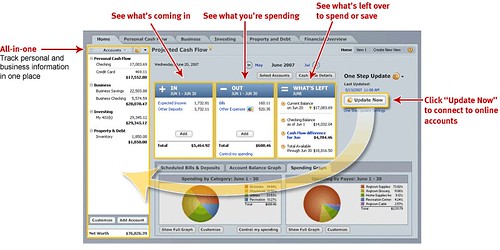


Wednesday, August 25, 2010

personal finance budgets


Now that Wesabe is officially closed, many users are looking for an alternative that offers the same flexibility and features -- for many this alternative is, or should be MoneyStrands.


MoneyStrands is a free tool that has helped people manage their money online since it launched in March 2009 -- and in short order has won a Webby award for the best of the web in the banking and bill-pay category. This honor is no surprise when you consider that MoneyStrands offers features you won't find in many competing tools such as Mint.


Like all modern personal finance tools, MoneyStrands can connect to a large number of banking and financial institutions, but unlike most competitors gives users the ability to manually upload their account data. This option is a must-have for those who don't want to give their login info to a third party, or who bank at a smaller bank or credit union that personal finance tools cannot connect to for automatic updates.


MoneyStrands also sets itself apart from the competition because it is designed to make it easy for international and non-English speaking users to use the tool. The MoneyStrands website can be viewed in both English and Spanish with a toggle in the settings and users can choose their preferred currency from a long list. According to MoneyStrands, consumers use the service in 44 countries.


These features supplement the standard account linking and money management that the MoneyStrands tool handles well. Users can view spending and account history in one location as well as compare spending in categories such as shopping, food & dining and more to see how they stack up to the rest of the community. Filters allow you to compare yourself to other members based on age, gender, marital status, education and other variables.


MoneyStrands also has a budgeting tool that tracks spending and sets email alerts when a budget category reaches a certain level so spending can be put in check. The tool is fairly simple and requires users to figure out their own goals, but Atakan Cetinsoy, General Manager of MoneyStrands told WalletPop in a phone interview that an improved budgeting tool that walks users through the process is coming in the next few months.


MoneyStrands is easy to use and offers significant value to users; especially those who can't or don't want to link their accounts directly to a third-party service.


Some Republicans and Democrats can get their heads together now and then.


When I had the privilege of working for Senator Jeff Bingaman (D-NM) in the US Senate, I had just moved over from serving as founding Executive Director of the Nixon Center for Peace & Freedom, later renamed (thankfully) "The Nixon Center".


Senator Bingaman at the time, along with his chief of staff Patrick Von Bargen, were asking key questions about the structure of international trade and finance and why such large bilateral deficits were building between the US and respectively Japan and China. University of Chicago-trained neoclassical economists regularly parroted the line that bilateral deficits were "meaningless" and would be balanced out over time with other global trade partners -- and would on a bilateral basis rise and fall, appearing and disappearing in a highly fluid global economic environment.


Bingaman's and Von Bargen's questions then are even more relevant today -- and given the time on the clock since, it's clear that the economists who argued that deficits were meaningless or that a job is a job is a job -- whether working as a wallet maker or a nano-technology app developer -- were wrong.


But Jeff Bingaman, even though skeptical about how the global economy was working in real rather than ideological terms, never turned his back on international engagement. In 1996, Bingaman, Von Bargen and I traveled to Japan, South Korea, China, and other parts of Asia. This, then, was an annual trip supplemented by his personal trips to Guatemala and trips to Europe, Russia and more. Bingaman, now Chairman of the Senate Committee on Energy, remains deeply engaged and interested in international affairs.


And while most Senators and Congressman make a point of pushing 95% of their available press time towards the Bartlesville news outlet (in the case of Oklahoma) over the demands of the Yomiuri, Le Monde, Al Jazeera, or the People's Daily, Bingaman is one that does make time for international media.


The Nixon Center as well was stacked with big personalities who were then and remain deeply committed to America's engagement in global affairs. While the Nixon Center is actually fastidiously non-partisan and has key Dems and Republicans engaged with it, it's hard to hide all of its Republican stripes when in fact the institution's inspiration and founder was a powerful two-term winning Republican President of the United States.


My point is that there are Democrats and Republicans -- lots of them -- committed to robust international engagement, to smart foreign aid, and to coherent and sensible U.S. international public diplomacy.


But just as when I worked for Bingaman in the Senate and there were some Democrats and more Republicans who looked at having a passport as a political liability, many in the Tea Party movement are a manifestation of a similar pugnacious nationalism that disdains international institutions and US engagement abroad.


One of the major bipartisan NGOs committed to internationalism in Washington is the U.S. Global Leadership Coalition. I attended the USGLC's gala dinner last year featuring NBC's Andrea Mitchell and Secretary of State Hillary Clinton.


But the guy who really impressed me was the charismatic Republican Congressman from Illinois, Aaron Schock -- who went on stage and made a case as strong as any liberal internationalist I have heard for the hard core national interest reasons that the U.S. should support global affairs and engagement -- and yes, foreign aid budgets.


Aaron Schock is a serious player on the way up -- and too many are distracted by his better than average looks and youth. I didn't support his approach to Honduras (for the most part) that he seemed to have jointly worked out with Senator Jim DeMint -- but that is beside the point. Schock is thinking hard about smart policy, not just coasting with his new found power and privileges in Washington.


If the USGLC can bring Hillary Clinton and the Republican House Deputy Whip together to sing from similar playbooks, then I have time for this private sector initiative to promote public support for international engagement.


If you are in DC (and if not, I am sure that there will be "live streaming" that I will arrange to have run here at TWN), you might want to attend the annual USGLC 2010 Washington Conference (registration information here) that takes place September 28-29, 2010 at Washington's Grand Hyatt.


I would support this meeting whether I was speaking or not -- but I happen to be on the program along with NBC Meet the Press' David Gregory, Under Secretary of the Treasury Lael Brainard, US AID Administrator Rajiv Shah, U.S. Trade Representative Ron Kirk, and the indefatigable Joshua Rogin -- who writes Foreign Policy's "The Cable".


-- Steve Clemons publishes the popular political blog, The Washington Note. Clemons can be followed on Twitter @SCClemons


penis extender reviews

Health 2.0 <b>News</b>: From Space Food to Eye Tracking and Hospital <b>...</b>

Comments». 1. Health 2.0 News: From Space Food to Eye Tracking and Hospital … | Scott Ashjian News - August 25, 2010. the original here: Health 2.0 News: From Space Food to Eye Tracking and Hospital … Comments ...

Fox <b>News</b> Rejects Media Matters Ad Highlighting Its $1 Million GOP <b>...</b>

Mediate's Colby Hall has a new report today claiming that progressive media watchdog group Media Matters was never "serious" about putting up the funds to run an ad on Fox News about News Corp's $1 million donation to the Republican ...

Apple In Talks With <b>News</b> Corp, CBS, And Disney For 99-Cent TV Show <b>...</b>

News Corporation (News Corp) is the world's second-largest media conglomerate (behind The Walt Disney Company) as of 2008 and the world's third largest in entertainment as of 2009. The company's Chairman, Chief Executive. ...


Friday, August 6, 2010

managing your personal finance

As you’ll read tomorrow (or Monday), I’ve entered a new phase in my life. After years of hard work and long hours building this blog (time that I’ve enjoyed), I’ve been shifting things around so that I have more free time. As a result, I’m going to have more time to devote to creating quality blog posts, instead of rushing around at the last minute looking for something to write about.


Because of this, it’s time yet again to take requests. I do this about once a year, and it’s a great way to get a feel for what GRS readers are interested in. I’d be grateful if you’d take the time to leave a comment below with topic suggestions or article requests. It doesn’t matter if we’ve covered the subject in the past. If you’d like me (or one of the other GRS staff) to write about it, let me know.


Have there been too many articles about credit cards? Too few articles about credit cards? Would you like to know more about individual savings accounts? Do you like the articles about the psychology of spending? Would it be helpful to have somebody come in to explain insurance concepts in plain English? Should I try to persuade my wife to share more of her recipes now and then? Let me know what you’d like to read about!


While you’re all providing feedback about the site, here are a few recent articles of note:


Over at The Simple Dollar, Trent and his readers had a thoughtful discussion about the obligations of wealth. “I think there is some inherent distrust of the rich in the mainstream of American society,” Trent writes as he describes how a wealthy person can keep from alienating his friends. There’s so much to say about this topic; I’m tempted to write an entire article about it.


GRS reader Steven writes a blog called Hundred Goals, which is about achieving your goals while managing your finances. After Sierra’s post this morning about travel, he dropped me a line to let me know that he has a recent article about how to have a great vacation.


Speaking of vacation, my pal Jason over at No Credit Needed spent time compiling day-use fees and free days for state parks across the United States. Handy page to bookmark!


And here’s more travel! At The Art of Non-Conformity, my good friend Chris Guillebeau has posted a beginner’s guide to travel hacking. I’ve been asking him to share this info for a long time; now I’ve got to take responsibility to use the knowledge he’s shared.


Finally, I’ve been giving a lot of interviews lately. I’m much more comfortable with these than I used to be. (They used to scare me to death!) Some examples:


  • Colleen from The Frisky interviewed me about how to save money even when you’re living paycheck to paycheck. This is a tough quandary, something I’m asked about a lot.


  • In an interview with BeFrugal, I discuss frugality, happiness, and conscious spending. (Note: “the ballot” should be “the balance” — I must have mumbled.)


  • Jeff Rose at Good Financial Cents also interviewed me. This interview is very much about the process of writing a book, which may or may not interest you.


  • I also spoke with Beverly Harzog from Card Ratings. We chatted about credit cards, of course, but also about other aspects of personal finance.


  • Finally, USA Weekend has a short piece on how to give your 401(k) a midyear check, for which author Richard Eisenberg interviewed me back in May. This is a perfect example of how much work goes into even a small newspaper article. Eisenberg spent 20-30 minutes on the phone with me, and I’m sure he did the same with the other folks he quotes. Plus, I’ll bet he spent a lot of time writing. I wouldn’t be surprised if there were 4-6 hours in this small piece.


Okay, one last thing before I go. Tim pointed me to a two-year-old New York Times series about the debt trap, which includes an interactive infographic showing average household debt loads over the past century.


That’s enough links for today. Please do leave a comment with topic requests or other feedback. Meanwhile, it’s time for me to go do some yardwork…


deals, Software, VC


Jive Software Nabs $30M in Round From Kleiner Perkins, Sequoia Capital


Thea Chard 7/21/10

Jive Software, the Palo Alto, CA-based software company started in Portland, OR, has received $30 million in Series C financing led by Kleiner Perkins Caufield & Byers.


This latest shot of cash, part of which comes from Sequoia Capital, means the company has raised more than $57 million in the last three years. Sequoia had been Jive’s sole investor up until this point, providing $12 million back in October, and $15 million in 2007.


“This is the biggest joint investment that Kleiner and Sequoia have done since they partnered up with Google,” says Bryan LeBlanc, Jive’s chief financial officer.


The investors are betting big that Jive has figured out how to harness some key elements of social media for business. Jive provides social-networking, communication, collaboration, and social media monitoring tools to more than 5,000 businesses, a group that ranges from small and mid-size companies to huge global brands. Jive’s customer roster includes Nike, Starbucks, SAP, Cisco Systems, Charles Schwab, and Intel. The company also provides social networking and collaboration software for a number of U.S. government agencies, as well as congressional members and their staffs.


“We’re the largest and fastest-growing company in this new category,” says Christopher Lochhead, Jive’s chief strategy advisor. “It’s about a $5 billion dollar market growing at about 40 percent, and we’re the clear leaders.”


The company’s biggest competitors include Microsoft and IBM. But according to Lochhead, Jive has an advantage—the support of some significant VC dollars, which he says will give Jive the ability to expand its product offerings and hire the best talent Silicon Valley has to offer in “multiple gene pools.”


As part of the deal, Kleiner Perkins managing partner Ted Schlein will be joining the Jive board of directors. The $30 million capital will be used to “accelerate Jive’s rapid growth and further drive the company’s leadership in the social business market,” according to a company statement.


What does that mean for potential clients? That the company will be expanding on its current social business software—the “doppler weather radar” of what’s going on in specific markets as Lochhead puts it. It will also allow Jive to focus on developing four strategic pillars moving forward. First is what Lochhead calls  ”Jive What Matters,” a one-stop command center that encompasses “everything that you need to get your job done,” in terms of monitoring deadlines, status updates, sales numbers, all in one place. Then there’s Jive mobile apps; social widgets, such as YouTube and SalesForce, integrated into the software; and seeking out more strategic partnerships with companies like Google and Twitter.


“What social business software entails is a new way to engage with your employees, customers and the web,” Lochhead says. “Why is it so fun, effective and easy to do all of this stuff in my personal life, and yet work sucks? All of those innovations in the consumer social web, Jive is bringing to the enterprise.” He adds: “It’s a new way to do business that allows people to work together, interact, in a way that just wasn’t possible before.”


LeBlanc, the finance chief, added: “$30 million allows us to have the currency to execute that strategy.”


Though Jive, founded in Portland, OR in 2001, relocated its headquarters to Palo Alto, CA last May, it continues to maintain a growing presence in the Pacific Northwest. The company laid off one-third of its employees—around 40 people, including the vice president of engineering and vice president of sales—after the economic down turn in 2008. But Lochhead says it’s maintained profitability and is growing again, with 270 employees spread throughout the offices in Palo Alto, Portland, OR, and Boulder, CO, as well as two outposts in Europe. In January, the company posted record profits—an 85 percent increase in full-year revenue in 2009 when compared to the previous year.


And although LeBlanc could not give us exact figures on how Jive is doing this year, he did say that the financial support from Kleiner Perkins and Sequoia is a strong indication of the company’s potential.


“We do intend to build a large, relevant software company, and often when you look at large, relevant software companies, they’re $1 billion companies,” LeBlanc said. “Having that capital now—I think it’s a testament that Sequoia has been very bullish about this space…it’s unusual and we feel, frankly, very honored to have two of the titans of Sand Hill Road both behind us.”


Thea Chard is the Assistant Editor for Xconomy Seattle. You can e-mail her at tchard@xconomy.com or follow her on Twitter at http://twitter.com/theachard.


penis extender

Quicken Home &amp; Business 2008: Manage both your personal and business finances together in one place by Quicken Online


As you’ll read tomorrow (or Monday), I’ve entered a new phase in my life. After years of hard work and long hours building this blog (time that I’ve enjoyed), I’ve been shifting things around so that I have more free time. As a result, I’m going to have more time to devote to creating quality blog posts, instead of rushing around at the last minute looking for something to write about.


Because of this, it’s time yet again to take requests. I do this about once a year, and it’s a great way to get a feel for what GRS readers are interested in. I’d be grateful if you’d take the time to leave a comment below with topic suggestions or article requests. It doesn’t matter if we’ve covered the subject in the past. If you’d like me (or one of the other GRS staff) to write about it, let me know.


Have there been too many articles about credit cards? Too few articles about credit cards? Would you like to know more about individual savings accounts? Do you like the articles about the psychology of spending? Would it be helpful to have somebody come in to explain insurance concepts in plain English? Should I try to persuade my wife to share more of her recipes now and then? Let me know what you’d like to read about!


While you’re all providing feedback about the site, here are a few recent articles of note:


Over at The Simple Dollar, Trent and his readers had a thoughtful discussion about the obligations of wealth. “I think there is some inherent distrust of the rich in the mainstream of American society,” Trent writes as he describes how a wealthy person can keep from alienating his friends. There’s so much to say about this topic; I’m tempted to write an entire article about it.


GRS reader Steven writes a blog called Hundred Goals, which is about achieving your goals while managing your finances. After Sierra’s post this morning about travel, he dropped me a line to let me know that he has a recent article about how to have a great vacation.


Speaking of vacation, my pal Jason over at No Credit Needed spent time compiling day-use fees and free days for state parks across the United States. Handy page to bookmark!


And here’s more travel! At The Art of Non-Conformity, my good friend Chris Guillebeau has posted a beginner’s guide to travel hacking. I’ve been asking him to share this info for a long time; now I’ve got to take responsibility to use the knowledge he’s shared.


Finally, I’ve been giving a lot of interviews lately. I’m much more comfortable with these than I used to be. (They used to scare me to death!) Some examples:


  • Colleen from The Frisky interviewed me about how to save money even when you’re living paycheck to paycheck. This is a tough quandary, something I’m asked about a lot.


  • In an interview with BeFrugal, I discuss frugality, happiness, and conscious spending. (Note: “the ballot” should be “the balance” — I must have mumbled.)


  • Jeff Rose at Good Financial Cents also interviewed me. This interview is very much about the process of writing a book, which may or may not interest you.


  • I also spoke with Beverly Harzog from Card Ratings. We chatted about credit cards, of course, but also about other aspects of personal finance.


  • Finally, USA Weekend has a short piece on how to give your 401(k) a midyear check, for which author Richard Eisenberg interviewed me back in May. This is a perfect example of how much work goes into even a small newspaper article. Eisenberg spent 20-30 minutes on the phone with me, and I’m sure he did the same with the other folks he quotes. Plus, I’ll bet he spent a lot of time writing. I wouldn’t be surprised if there were 4-6 hours in this small piece.


Okay, one last thing before I go. Tim pointed me to a two-year-old New York Times series about the debt trap, which includes an interactive infographic showing average household debt loads over the past century.


That’s enough links for today. Please do leave a comment with topic requests or other feedback. Meanwhile, it’s time for me to go do some yardwork…


deals, Software, VC


Jive Software Nabs $30M in Round From Kleiner Perkins, Sequoia Capital


Thea Chard 7/21/10

Jive Software, the Palo Alto, CA-based software company started in Portland, OR, has received $30 million in Series C financing led by Kleiner Perkins Caufield & Byers.


This latest shot of cash, part of which comes from Sequoia Capital, means the company has raised more than $57 million in the last three years. Sequoia had been Jive’s sole investor up until this point, providing $12 million back in October, and $15 million in 2007.


“This is the biggest joint investment that Kleiner and Sequoia have done since they partnered up with Google,” says Bryan LeBlanc, Jive’s chief financial officer.


The investors are betting big that Jive has figured out how to harness some key elements of social media for business. Jive provides social-networking, communication, collaboration, and social media monitoring tools to more than 5,000 businesses, a group that ranges from small and mid-size companies to huge global brands. Jive’s customer roster includes Nike, Starbucks, SAP, Cisco Systems, Charles Schwab, and Intel. The company also provides social networking and collaboration software for a number of U.S. government agencies, as well as congressional members and their staffs.


“We’re the largest and fastest-growing company in this new category,” says Christopher Lochhead, Jive’s chief strategy advisor. “It’s about a $5 billion dollar market growing at about 40 percent, and we’re the clear leaders.”


The company’s biggest competitors include Microsoft and IBM. But according to Lochhead, Jive has an advantage—the support of some significant VC dollars, which he says will give Jive the ability to expand its product offerings and hire the best talent Silicon Valley has to offer in “multiple gene pools.”


As part of the deal, Kleiner Perkins managing partner Ted Schlein will be joining the Jive board of directors. The $30 million capital will be used to “accelerate Jive’s rapid growth and further drive the company’s leadership in the social business market,” according to a company statement.


What does that mean for potential clients? That the company will be expanding on its current social business software—the “doppler weather radar” of what’s going on in specific markets as Lochhead puts it. It will also allow Jive to focus on developing four strategic pillars moving forward. First is what Lochhead calls  ”Jive What Matters,” a one-stop command center that encompasses “everything that you need to get your job done,” in terms of monitoring deadlines, status updates, sales numbers, all in one place. Then there’s Jive mobile apps; social widgets, such as YouTube and SalesForce, integrated into the software; and seeking out more strategic partnerships with companies like Google and Twitter.


“What social business software entails is a new way to engage with your employees, customers and the web,” Lochhead says. “Why is it so fun, effective and easy to do all of this stuff in my personal life, and yet work sucks? All of those innovations in the consumer social web, Jive is bringing to the enterprise.” He adds: “It’s a new way to do business that allows people to work together, interact, in a way that just wasn’t possible before.”


LeBlanc, the finance chief, added: “$30 million allows us to have the currency to execute that strategy.”


Though Jive, founded in Portland, OR in 2001, relocated its headquarters to Palo Alto, CA last May, it continues to maintain a growing presence in the Pacific Northwest. The company laid off one-third of its employees—around 40 people, including the vice president of engineering and vice president of sales—after the economic down turn in 2008. But Lochhead says it’s maintained profitability and is growing again, with 270 employees spread throughout the offices in Palo Alto, Portland, OR, and Boulder, CO, as well as two outposts in Europe. In January, the company posted record profits—an 85 percent increase in full-year revenue in 2009 when compared to the previous year.


And although LeBlanc could not give us exact figures on how Jive is doing this year, he did say that the financial support from Kleiner Perkins and Sequoia is a strong indication of the company’s potential.


“We do intend to build a large, relevant software company, and often when you look at large, relevant software companies, they’re $1 billion companies,” LeBlanc said. “Having that capital now—I think it’s a testament that Sequoia has been very bullish about this space…it’s unusual and we feel, frankly, very honored to have two of the titans of Sand Hill Road both behind us.”


Thea Chard is the Assistant Editor for Xconomy Seattle. You can e-mail her at tchard@xconomy.com or follow her on Twitter at http://twitter.com/theachard.


online stock trading online stock trading how to lose weight fast

NFL Training Camp <b>News</b>: MRI Shows No Damage To Albert <b>...</b>

NFL Training Camp News: MRI Shows No Damage To Albert Haynesworth's Knee.

Small Business <b>News</b>: The Online Entrepreneur | Small Business <b>News</b> <b>...</b>

Planning a new small business? You may want to consider doing it online. In this small business news roundup, we look at a variety of tools and tips for.

Exclusive: Fujifilm&#39;s phase detection system explained: Digital <b>...</b>

Exclusive: Fujifilm's phase detection system explained: With the announcement of the Fujifilm F300 EXR and Z800 EXR coming on a day that also saw four other cameras being launched, it would be easy to overlook their most radical feature ...


Quicken Home &amp; Business 2008: Manage both your personal and business finances together in one place by Quicken Online


big white booty